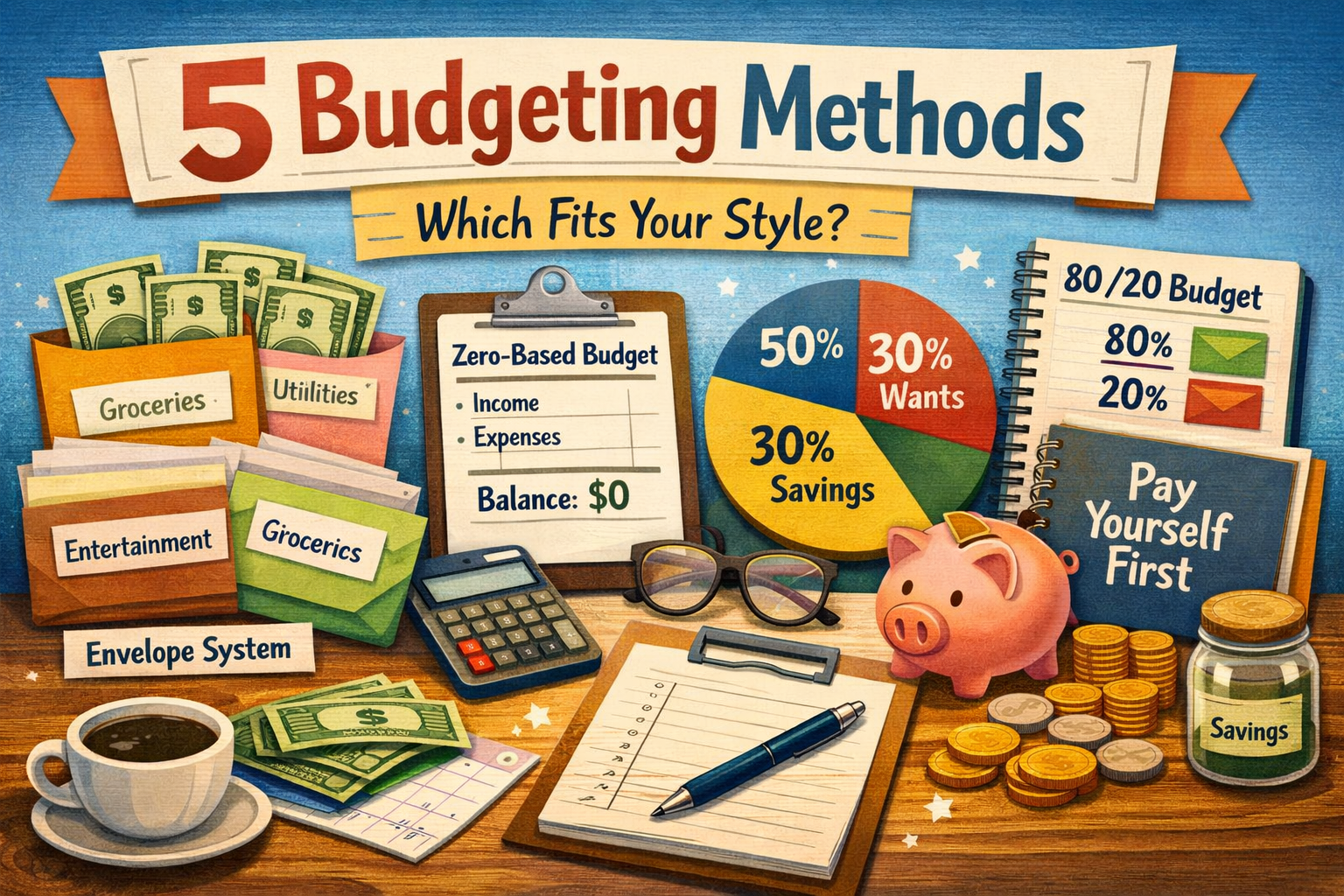
5 Budgeting Methods (Envelope, Zero-Based, 50/30/20, etc.) — Which Fits Your Style?
Budgeting is essential for achieving financial stability and reaching your money goals. However, there's no one-size-fits-all approach. Here are five popular budgeting methods to help you find the one that fits your style.
1. Envelope Method
How It Works
The Envelope Method is a cash-based system where you divide your income into envelopes labeled with different spending categories (groceries, entertainment, bills, etc.). Once an envelope is empty, you can't spend any more in that category until the next budget cycle.
Pros
- Great for controlling overspending.
- Very visual and hands-on.
- Helps stick to discretionary spending limits.
Cons
- Less convenient in a digital payment world.
- Hard to track savings or investments with cash-only envelopes.
2. Zero-Based Budgeting
How It Works
Zero-Based Budgeting requires you to allocate every dollar of your income to specific categories (expenses, savings, debt repayment) so that your income minus your expenditures equals zero at the end of the month.
Pros
- Provides complete control over every dollar.
- Encourages intentional spending and saving.
- Reduces financial waste.
Cons
- Can be time-consuming to set up each month.
- Requires detailed tracking and discipline.
3. 50/30/20 Rule
How It Works
The 50/30/20 budgeting method divides your after-tax income into three categories:
- 50% for needs (rent, groceries, bills)
- 30% for wants (entertainment, dining out, hobbies)
- 20% for savings and debt repayment
Pros
- Simple to understand and implement.
- Provides balance between needs, wants, and savings.
- Flexible for most income levels.
Cons
- Percentages may not suit high-cost-of-living areas.
- Not precise for complex financial goals.
4. Pay-Yourself-First Method
How It Works
This method prioritizes savings or investments first. You set aside a fixed percentage of your income before spending on anything else. The remaining money is used for bills and discretionary spending.
Pros
- Encourages consistent savings growth.
- Helps achieve financial goals faster.
- Reduces temptation to overspend.
Cons
- May require lifestyle adjustments if fixed costs are high.
- Less focus on controlling discretionary spending.
5. Percentage-Based Budgeting
How It Works
Percentage-Based Budgeting assigns specific percentages of your income to different categories beyond just needs, wants, and savings. For example: 40% bills, 20% groceries, 10% entertainment, 20% savings, 10% debt repayment.
Pros
- Highly customizable to individual financial situations.
- Can address multiple financial priorities at once.
- Flexible for changing income levels.
Cons
- Requires careful tracking.
- Might be harder to stick to without discipline.
Choosing the Right Method
Selecting the best budgeting method depends on your personality, lifestyle, and financial goals:
- Hands-on and visual: Envelope Method
- Highly detailed and disciplined: Zero-Based Budgeting
- Simple and balanced: 50/30/20 Rule
- Savings-focused: Pay-Yourself-First
- Customizable: Percentage-Based Budgeting
Conclusion
No single method works for everyone. Experiment with one or combine multiple strategies to see what fits your lifestyle and goals. The key is to stay consistent and intentional with your money.
Take control of your finances today — try Expensinator to track your spending, test different budgeting methods, and find the style that works best for you!